
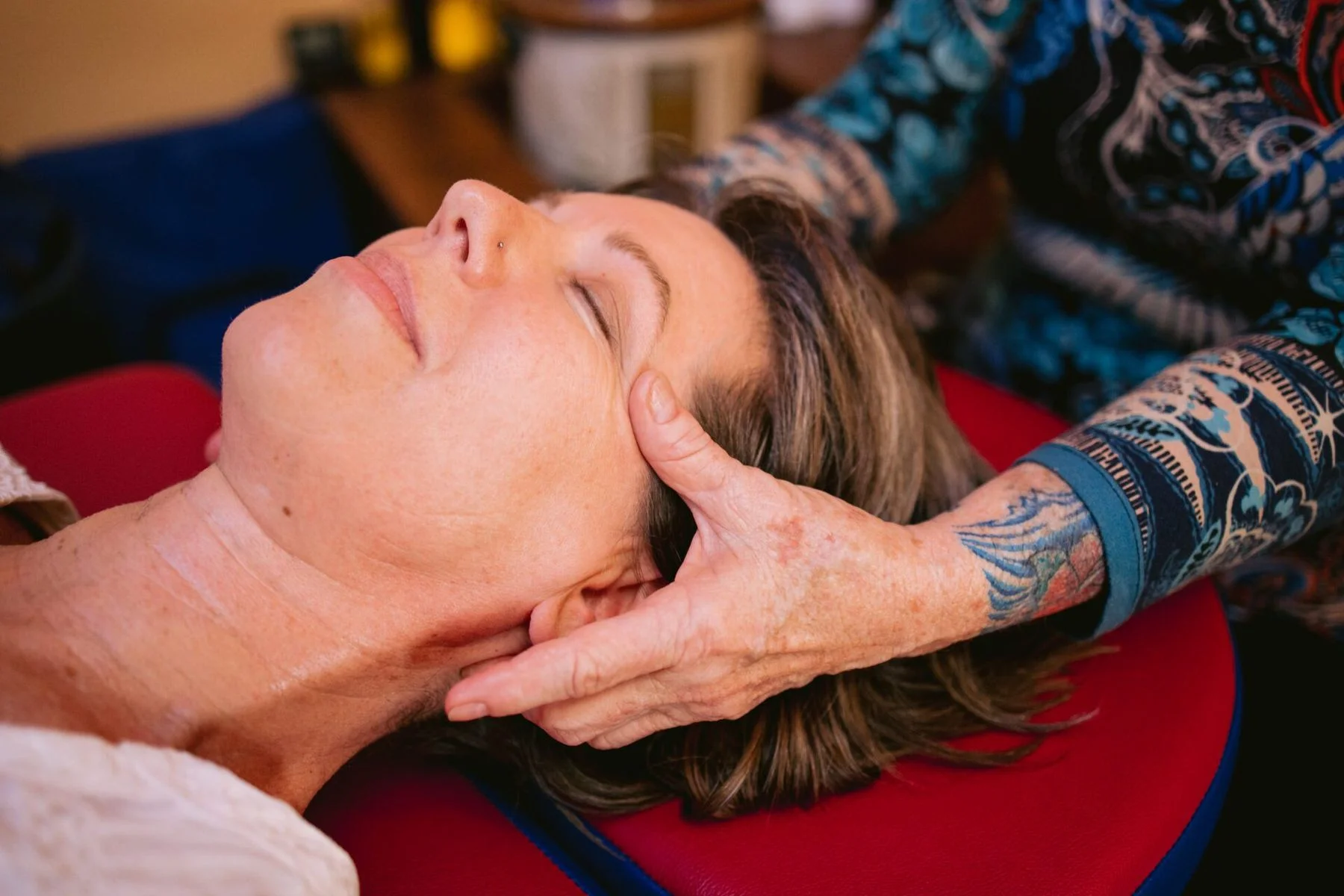
Massage for anxiety is a question about support, not a cure. Stress can show up as tight shoulders, a clenched jaw, or muscles that never seem to settle. Massage gives you time to rest while Maggie works on that physical tension.
Massage and anxiety care have different roles. If you live with anxiety, a session may be one supportive part of your routine. It is not a cure or a replacement for mental health treatment, medication, or advice from a qualified healthcare professional.
Massage for stress, with room to slow down
Massage for stress creates a break from tasks and distractions. Some people find the quiet and focused attention helpful when they feel overloaded. There is no requirement to feel a particular way during or after a session.
Comfort and communication
Feeling in control matters. You can tell Maggie what pressure feels comfortable, ask her to avoid a sensitive area, or request a change in position. Undress only to your comfort level and remain appropriately draped.
Let her know if silence, conversation, or explaining the next part of the session would help you feel more at ease.
Working with muscle tension
Stress and physical tension can occur together. Gentle, flowing work or targeted attention to tight muscles may feel useful. Maggie can explain the difference between relaxation massage, craniosacral therapy, and firmer deep tissue work.
Sleep and daily routines
Some clients choose massage because they want to feel less tense before resting. It does not guarantee better sleep or treat the causes of insomnia. Persistent sleep problems deserve a conversation with a healthcare professional.
A manageable routine can include movement, rest, and whatever care your clinician recommends. Massage can sit alongside those choices if it feels helpful to you.
Choosing a session
You do not have to decide on a technique alone. Tell Maggie about the kind of touch you prefer and any concerns before booking.
Read the first-visit questions or contact Maggie to talk through the options.